Canvas
A textured surface often stretched around a wood frame, giving the work presence as an object rather than only as a flat image.
The creative legacy of William and Hui Cha Stanek — a life in books, art, light, and story.
Art & Photography
Print education belongs to the visual legacy because a photograph or artwork is not finished for a collector until it has been carefully prepared, printed, surfaced, and presented.
Many viewers first respond to the image itself: the light, the place, the color, the atmosphere. A collector eventually asks a second set of questions. How was the work printed? What surface carries it? How long will the colors remain stable? How should it be displayed? What finish best serves the image?
Those questions are not separate from the art. They are part of the life of the work after the moment of seeing. Print education gives viewers and collectors a calmer way to understand that life.
Within the Stanek visual record, Hui Cha Stanek is especially connected to this practical knowledge. The studio materials preserve her explanations of canvas presentation, giclee printing, pigment-based inks, finishes, and the care that helps artwork endure.
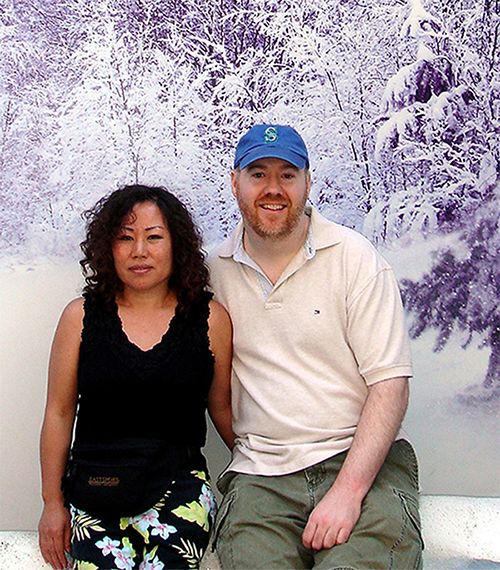
Hui Cha’s role in the studio record is both practical and creative. She speaks about how artworks on canvas are stretched around wood frames, how fine-art printing captures the shades of the original work, and how finish choices affect the surface a collector will live with.
This is the kind of knowledge that often sits quietly behind a finished piece. It may not call attention to itself, but it shapes the way a work enters a home, office, collection, or archive.
A textured surface often stretched around a wood frame, giving the work presence as an object rather than only as a flat image.
A fine-art printing process used to reproduce color and detail with care, often associated with archival presentation.
Inks chosen for color quality and longevity, helping a print hold its tonal range over time when properly cared for.
Matte, semi-gloss, high-gloss, textured, or other finishes can change how light moves across the surface.
A presentation form valued for vivid color, crispness, and a ready-to-hang structure in some studio materials.
A flexible way to ship and frame a work locally, especially when a collector wants to choose framing separately.
Surface changes the emotional reading of a work. A matte surface can soften glare and create a quieter presence. A gloss surface can deepen contrast and make color feel immediate. Canvas can add texture and objecthood. Metal can bring brightness and clarity.
The right choice depends on the work, the room, the available light, and the collector’s own relationship to the image. A luminous sunset, a waterfall, a seascape, a quiet architectural study, or a mixed-media abstraction may each ask for a different surface.
Scale is not only a measurement. It shapes how the body meets the work. A smaller piece may invite intimacy. A larger piece may create atmosphere across a room. A pair of works can establish rhythm. A single large image can become a daily point of return.
Collectors should think about where the work will live: the wall, the light, the distance from which it will be seen, the furniture around it, and the feeling the room already carries. Art does not float outside life. It becomes part of the rooms where life happens.
Good materials matter, but care matters too. A print should be handled thoughtfully, kept away from damaging conditions, and placed where light, moisture, heat, and surface contact will not shorten its life unnecessarily.
Archival printing and careful finishing are ways of giving an image a longer future. Collector care continues that work after the piece leaves the studio.
Documentation, editions, authenticity, presentation, and the record that travels with the work.
A calm guide to permissions, image use, reproduction, and respectful handling of the work.
Fieldwork, natural light, weather, timing, place, and the patient act of seeing.
Color, surface, texture, memory, and the studio decisions behind finished works.
Publishing, operations, print knowledge, presentation, and the quiet structure behind creative work.
A broader starting point for collectors interested in the photographs, paintings, editions, and provenance.
A print is a meeting place: image, material, surface, scale, and time. Print education helps that meeting happen with more confidence, so the work can be lived with, protected, and understood.