Sunscapes
Images shaped by sunrise, sunset, afterlight, changing skies, and the color that lingers at the edge of day.
The creative legacy of William and Hui Cha Stanek — a life in books, art, light, and story.
Art & Photography
The photography begins with fieldwork: being present to weather, light, place, season, and the passing moment.
Photography in the Stanek visual record is rooted in the discipline of being there. A camera may preserve a fraction of a second, but the work around that second is larger: choosing a place, studying the weather, watching the sky, returning in another season, and waiting for light to become expressive.
That patience is one of the quiet signatures of the work. The images are not simply records of places visited. They are records of attention: a shoreline after weather, a waterfall in changing light, a road or national park held at a particular hour, a landscape seen not only as scenery but as atmosphere.
The result is photography that belongs beside travel writing, art, and memory. It carries the practical knowledge of fieldwork, but also the emotional knowledge of return.
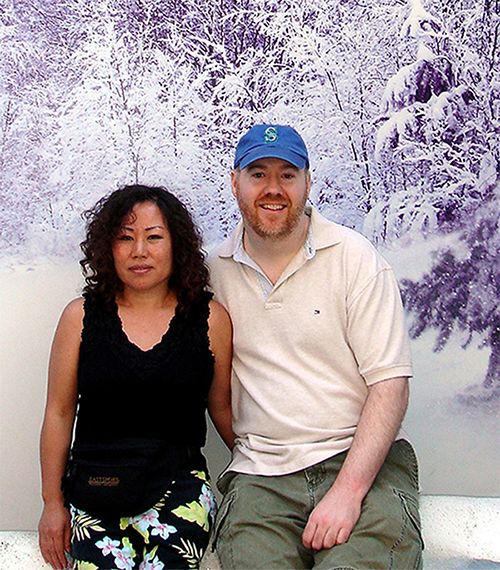
The photographic record should not be separated from the partnership behind it. William’s camera work often begins with plans made before the journey: locations, timing, equipment, weather, and the particular hope of what the light may do.
Hui Cha’s place in that practice matters. The studio and fieldwork record places her within the planning, support, print knowledge, and practical rhythm that help the images become more than isolated moments. The fieldwork is creative, but it is also logistical, patient, and shared.
Many photographs are built around conditions that cannot be commanded. Dawn arrives slowly. Sunset changes by the minute. Clouds alter the color of water. Rain can flatten a scene or make it luminous. A familiar overlook may be ordinary one afternoon and unforgettable the next morning.
This is why return matters. To revisit a place is to learn that it is never exactly the same place. The season changes. The sky changes. The photographer changes too. Over time, the work becomes less about taking a view and more about understanding how a place reveals itself.
That habit of return connects the photographs to the larger TVPress story: a life of writing, traveling, making, revising, and looking again.
Images shaped by sunrise, sunset, afterlight, changing skies, and the color that lingers at the edge of day.
Moving water, reflection, mist, rivers, shorelines, and the quiet force of weather passing through a scene.
National parks, mountains, coastlines, islands, forests, deserts, and the patience required to see them in changing light.
Photography connected to roads, journeys, cities, landscapes, and the lived experience of moving through the world.
Mist, shadow, reflection, weather, and the subtle conditions that turn a photograph into an emotional record.
The afterimage of a place: not only what was seen, but what remained after the light had changed.
The photography stands on its own, but it also speaks to the paintings and mixed-media works. A photograph may begin with direct witness. A painting may carry the same light into color, texture, surface, and memory. In both forms, the visual language depends on patience and atmosphere.
For readers and collectors, this connection is important. The camera, canvas, print, and collection are not separate rooms so much as neighboring ways of seeing. A photograph may preserve the moment. A mixed-media work may ask what the moment felt like after it had already passed.
Photography also becomes an object through choices of paper, canvas, metal, finish, scale, edition, and documentation. Those choices affect how the image lives in a room and how it is understood over time.
This is where the practical record of print education and provenance matters. A photograph is not only a digital file or a remembered view. In finished form, it becomes a print with materials, presentation, authorship, and care attached to it.
A deeper look at light as atmosphere, memory, structure, and visual method.
Paintings, watercolors, mixed-media works, texture, color, and emotional atmosphere.
Named collections, recurring visual themes, and bodies of work shaped by light and memory.
Canvas, giclee printing, pigment-based inks, finishes, surfaces, longevity, and presentation.
Documentation, editions, authenticity, presentation, and care for collectors.
The broader visual profile: photography, painting, fieldwork, light, place, and memory.
The quiet lesson of the photography is that the world changes when it is watched with care. Light passes. Weather clears. Water moves. A place becomes itself for a moment, then becomes something else. The photograph keeps one such moment, and asks the viewer to look long enough to feel it.