Witness
Light marks the moment as something seen and endured: the edge of weather, the hush after rain, the first clarity after shadow.
The creative legacy of William and Hui Cha Stanek — a life in books, art, light, and story.
Art & Photography
Light is not decoration in the work. It is atmosphere, memory, structure, and the quiet grammar through which place becomes feeling.
In William and Hui Cha Stanek’s visual record, light is more than a beautiful condition. It is the element that gives the work its shape. It reveals a waterfall after weather, softens a horizon, turns a familiar road into a remembered place, and gives a painted surface the sense that something has just passed through it.
This page gathers the visual idea that runs through much of the art and photography: light as witness, light as timing, light as structure, and light as a way of carrying emotion without explaining it too heavily.
The phrase belongs naturally beside the larger master-class and collection language of WilliamStanek.com, where art, photography, provenance, and named bodies of work are organized around light, atmosphere, fieldwork, and memory.
Much of the visual work begins before the image is made. Locations are chosen and studied. The time of day matters. So does the season, the sky, the position of the viewer, the weather just passed, and the weather still coming. A photograph may be made in a fraction of a second, but the seeing behind it can take hours, days, or years of return.
That is one reason the work often feels less like a simple view and more like a threshold. Dawn, dusk, rain, mist, shadow, reflected water, and the last color after sunset all suggest change. The image becomes not only a record of where the artist stood, but a record of attention.
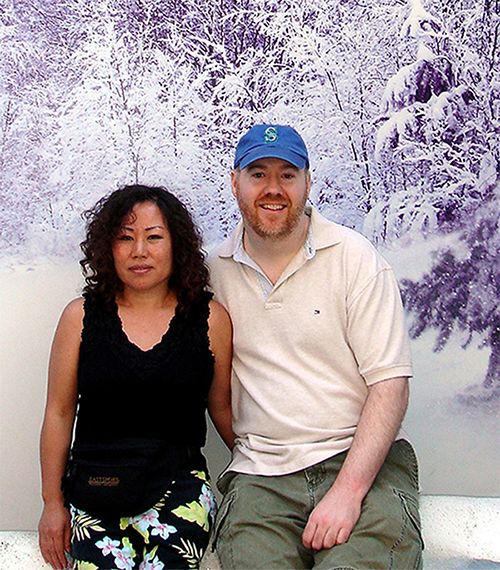
The architecture of light is also practical. It depends on planning, travel, timing, equipment, and trust. Hui Cha’s place in the record matters here: she appears in the fieldwork and studio sources as part of the planning, preparation, print knowledge, and shared rhythm behind the work.
That shared discipline keeps the visual legacy grounded. The language may be poetic, but the work itself is built through real decisions: when to go, where to stand, what to carry, when to wait, when to leave, and when the light has finally said enough.
Photography and painting handle light differently, but in this body of work they remain closely related. In the photographs, light arrives through the world: weather, water, sky, stone, road, window, shoreline, and horizon. In the paintings and mixed-media works, light becomes color, depth, texture, motion, and remembered atmosphere.
The movement between camera and canvas is not a break in the record. It is part of the same visual inquiry. What did the place feel like? What remained after the moment passed? What can color hold that a photograph only begins to suggest? What can a photograph preserve that memory would otherwise soften?
Light marks the moment as something seen and endured: the edge of weather, the hush after rain, the first clarity after shadow.
Light organizes the image. It draws the eye, creates depth, separates forms, and gives a scene its quiet architecture.
Light changes quickly, but the image lets it linger. A sky, a surface, or a reflection becomes a way of remembering.
Light gives emotional temperature to the work: warmth, distance, solitude, radiance, stillness, or movement.
The right light often cannot be hurried. Waiting becomes part of the authorship of the image.
A place seen again in another season or hour becomes a different subject. The work honors that change.
The architecture of light gives readers and collectors a helpful way into the work without reducing it to technique. It speaks to method, but also to feeling. It allows the photographs and paintings to be understood as part of a larger creative life: fieldwork, travel, print knowledge, collections, editions, and the long habit of looking closely.
That is the purpose of this page. Not to define the work too narrowly, but to give the viewer a calmer way to begin seeing it.
Fieldwork, weather, timing, natural light, seasonal change, and the patient act of seeing.
Paintings, watercolors, mixed-media work, layered color, texture, motion, and emotional atmosphere.
Named bodies of work, recurring visual themes, and collections shaped by light, color, memory, and feeling.
The best way to approach this visual work is slowly. Let the light lead first, then the place, then the feeling behind the place. In that order, the work begins to reveal how much of a life can be carried through a single changing sky.