The creative legacy of William and Hui Cha Stanek — a life in books, art, light, and story.
Hui Cha Stanek
The quiet strength within the creative record
Hui Cha Stanek, also known in the art world as HC Stanek, is woven through the story of books, art, publishing, fieldwork, family, photography, print knowledge, and the steady labor that helps creative lives endure.
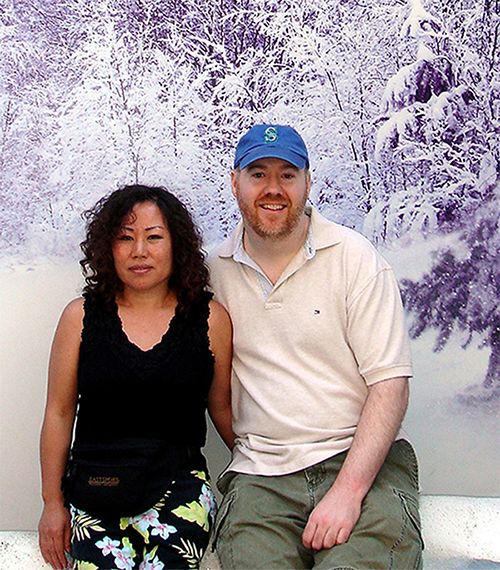
William and Hui Cha Stanek, whose shared creative life runs through decades of books, art, photography, publishing, and fieldwork.
At the center, not at the edge
TVPress treats Hui Cha Stanek as central to the record. She is not an appendix to William’s story. Her presence belongs in the creative partnership, publishing work, studio care, art and photography, print education, fieldwork, and family life behind decades of public work.
Some contributions are visible in photographs, art, exhibitions, print guidance, and studio materials. Others live in the less visible work that makes creative continuity possible: planning, organizing, protecting the work, helping it reach others, and keeping the larger life moving.
A creative partner
Much of the public record carries William’s name, but the work was often sustained by a partnership: practical, enduring, creative, and deeply human. Hui Cha’s role is part of that shared life.
In source materials connected to the studio and fieldwork, Hui Cha describes the rhythm behind the visual work: choosing locations, studying conditions, timing arrivals, preparing equipment, assisting on location, and understanding that weather, closures, traffic, and light cannot be fully controlled. The image may be made in a moment, but the work behind it can begin long before.
Publishing and studio work
Hui Cha belongs in the publishing and studio record as a person of steadiness, practical care, and continuity. Publishing and studio work require the kind of labor that is easy to overlook: planning, scheduling, production decisions, presentation, communication, and daily attention.
That work matters because creative lives do not endure on inspiration alone. They endure through structure, patience, trust, and the willingness to do what must be done again and again.
Print knowledge
The studio source record preserves Hui Cha’s guidance on art prints, including canvas, giclée printing, pigment-based inks, finishes, surface texture, and the care of printed work. This gives her role a practical and educational dimension.
For collectors and readers, that matters. It shows that the visual legacy is not only about making images. It is also about helping people understand how artworks are prepared, preserved, and lived with.
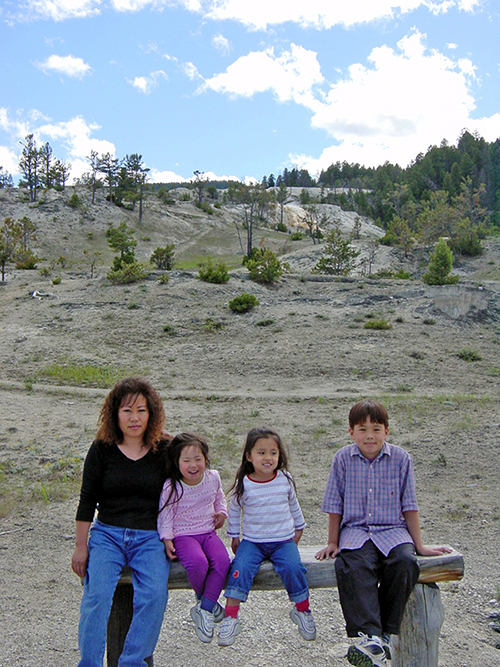
Hui Cha Stanek with the children at Yellowstone, circa 2002.
Family and fieldwork
Hui Cha’s story also belongs to family and fieldwork. Travel, photography, publishing, and family life were not separate worlds. They often moved together: on roads, in parks, in changing weather, with children, schedules, equipment, and the practical realities of making work while living a life.
That is part of why TVPress should speak about her with substance. The creative record is not only the public record. It is also the family record, the field record, the workroom record, and the care that holds them together.
Photography and art
Hui Cha appears in the art record as HC Stanek. Studio materials describe her as a photographer whose candid street photography and people-focused works were shown in gallery contexts and career retrospectives alongside William’s work.
TVPress should present this with restraint and respect. Her visual presence does not need to be overstated. It needs to be included clearly: as part of a shared studio life, a family life, and a body of work shaped by looking, travel, presentation, and care.
The labor that helps work endure
Creative continuity often depends on forms of labor that are not easy to name. Someone keeps track. Someone plans. Someone steadies the work when circumstances change. Someone understands the practical difference between an idea and a finished book, a captured image and a print, a field plan and a completed journey.
Hui Cha’s pages should make that labor visible without turning it into a list. She belongs in the story as a creative partner whose work helped shape the conditions in which books, photographs, art, publishing projects, family journeys, and studio life could continue.
The shared creative life at the center of TVPress: books, art, light, publishing, family, and story.
A steady presence
The Hui Cha Stanek pages should leave the reader with a clearer understanding of the shared legacy. Hui Cha is part of the creative life, the fieldwork, the publishing work, the family story, the art record, and the long labor behind the public record. TVPress begins from that truth and carries it forward with care.