The creative legacy of William and Hui Cha Stanek — a life in books, art, light, and story.
Photography and art
Seeing, assisting, preserving
Hui Cha Stanek’s art and photography story is woven through fieldwork, observation, print knowledge, studio presentation, and the shared visual life behind decades of work.
A visual presence
Hui Cha Stanek, also known in the art world as HC Stanek, belongs in the visual record with quiet clarity. Studio materials describe her as a photographer whose candid street photography and people-focused works were shown in gallery contexts and career retrospectives alongside William’s work.
TVPress presents that record without overstating it. Her visual presence is part of a larger shared practice: looking closely, traveling with purpose, helping prepare the conditions for fieldwork, and understanding how images become lasting works.
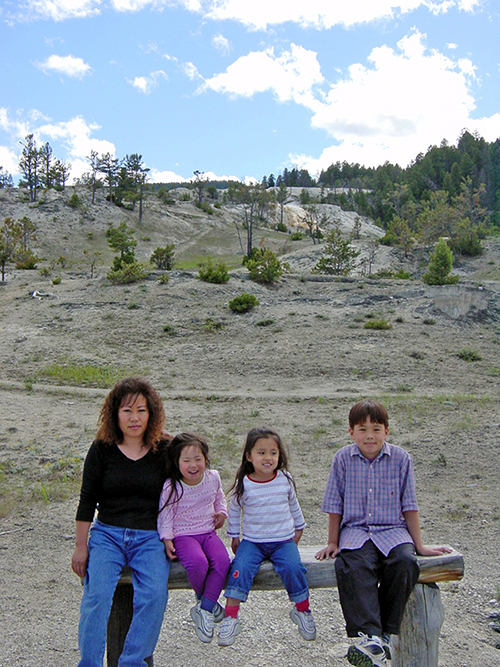
Hui Cha Stanek with the children at Yellowstone, circa 2002.
Fieldwork as attention
Fieldwork is not only the moment of taking a photograph. It includes the plan, the road, the weather, the waiting, the children, the equipment, the change of light, and the decision to return another day if the conditions are not right.
Hui Cha’s descriptions of working with William in landscape photography reveal a patient method: choose locations, study the area, time the arrival, prepare for the right season and hour, and leave room for the weather to surprise you.
Candid work
Hui Cha’s photography should be described with the same restraint we bring to the rest of the site. The available source record points especially toward candid, people-focused, and street-photography work, rather than a public persona built around spectacle.
That fits the larger tone of TVPress. Her work belongs to observation, presence, and the human scale of looking.
Shared visual practice
William’s photography often begins in patient attention to light, weather, movement, and place. Hui Cha’s role in the shared visual practice includes preparation, assistance, print knowledge, and the ability to help the work pass from field experience into finished form.
The result is not a single-person story. It is a visual legacy shaped by looking, planning, making, printing, and preserving.
Prints, surfaces, and the life of an image
Hui Cha’s print guidance gives the visual story a practical foundation. She explains giclée printing, pigment-based inks, canvas, finishes, and the way surfaces can shape a viewer’s experience of an artwork.
That knowledge matters because art does not live only in the instant it is made. It lives in the print, the frame, the wall, the home, the gallery, the collection, and the years of looking that follow.
Art as part of the shared life
On TVPress, Hui Cha’s photography and art should always be connected to the larger life: family, travel, studio work, fieldwork, and the long partnership with William. Her role is not simply to appear beside the work, but to help reveal the human structure around it.
The photographs and paintings are studies of light, weather, silence, movement, and memory. Hui Cha’s story helps show how those studies were surrounded by preparation, care, and lived experience.