The creative legacy of William and Hui Cha Stanek — a life in books, art, light, and story.
Family and fieldwork
The lived days behind the work
The creative record of William and Hui Cha Stanek was shaped not only in offices, studios, and books, but on roads, in parks, in changing weather, and within the ordinary demands of family life.
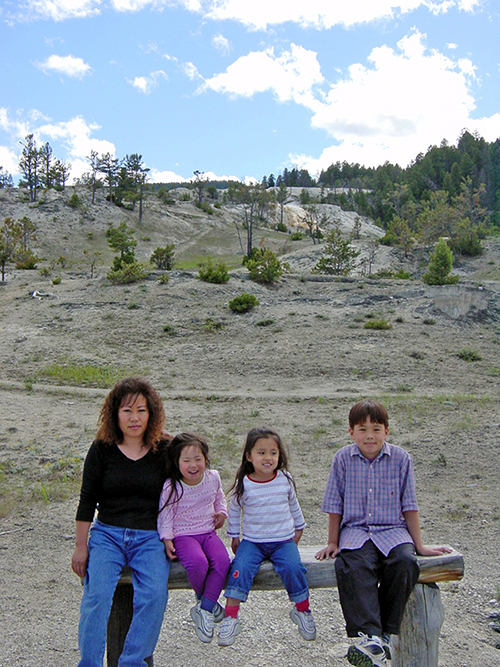
Hui Cha Stanek with the children at Yellowstone, circa 2002.
Where life and work met
Fieldwork rarely belongs to art alone. For William and Hui Cha, it also belonged to family: travel plans, children, equipment, weather, meals, long drives, delays, and the effort to keep moving while still paying attention to beauty.
The family images used on TVPress should be read in that spirit. They are not decorations. They are fragments of the human life behind the books, photographs, paintings, and publishing work.
Planning the field
Hui Cha’s fieldwork role is especially clear in the studio source record. Locations were chosen and studied. Arrivals were timed for light, season, position, and weather. Equipment had to be ready. The plan had to be careful enough to matter and flexible enough to change when the real world changed.
That kind of planning is part of the visual legacy. A photograph may look effortless when it succeeds, but the success often rests on patient preparation.
Family in motion
The family story matters because it gives scale to the work. These were not abstract creative years. They were lived years, with children, responsibilities, travel, uncertainty, joy, fatigue, and the small rituals that make a family life.
TVPress should let that human scale remain visible. It keeps the legacy from becoming only a list of accomplishments.
Fieldwork in practice
Fieldwork asks for attention to the world as it is: the light that changes, the road that closes, the weather that arrives, the child who needs care, the schedule that must bend.
Hui Cha’s role in that work was practical and steady. She helped create the conditions in which the work could happen, even when those conditions were never entirely under anyone’s control.
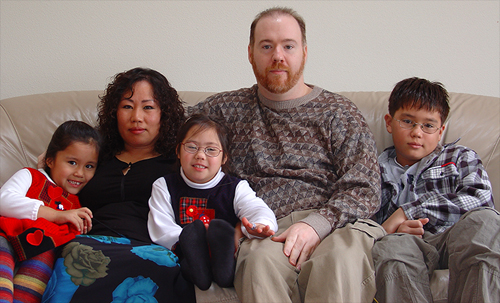
The Stanek family, circa 2004.
The family record
Family photographs belong in this section because they show the life around the work. They help visitors understand that creative legacy is not made only in public moments. It is also made through the private discipline of continuing: raising children, making plans, keeping commitments, and returning to the work again.
In that sense, Hui Cha’s family and fieldwork story is also a story of continuity. She helped hold together the ordinary life in which extraordinary amounts of work could be made.
A human archive
The TVPress archive should feel human. Family and fieldwork help make that possible. They remind the reader that the work came from people who traveled, planned, waited, worried, returned, revised, carried equipment, cared for children, and watched the light change.
Hui Cha’s place in that record is essential. She belongs to the shared creative life not as a footnote, but as one of the people who helped make the life possible.
The shared creative life at the center of TVPress: books, art, light, publishing, family, and story.
The work around the work
Family and fieldwork show the work around the work: the life that made the public record possible. TVPress honors that life because the creative legacy is not only what was published or printed. It is also how the work was carried, year after year.