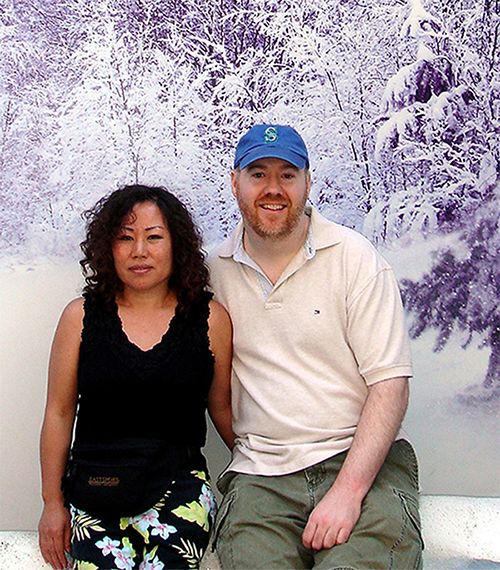
The creative legacy of William and Hui Cha Stanek — a life in books, art, light, and story.
Hui Cha Stanek
A partnership shaped by trust and work
The creative partnership between William and Hui Cha Stanek is one of the central threads of TVPress: practical, enduring, and deeply human.
William and Hui Cha Stanek, whose shared creative life runs through decades of books, art, photography, publishing, and fieldwork.
The life behind the public record
Creative work often reaches the public under one name, but it rarely survives by one person’s effort alone. In the Stanek record, Hui Cha belongs close to the center: in the planning, publishing, fieldwork, studio care, family rhythms, and long continuity that helped the work move from idea to finished form.
Her role is not an ornament to William’s story. It is part of the story’s structure. The books, photographs, art, trips, studio decisions, print conversations, and family journeys all point to a shared life in which creative work and daily life were not cleanly separated.
A quiet form of authorship
Some forms of authorship happen at the page, the canvas, or the lens. Others happen before and around those moments: choosing what can be attempted, preparing the conditions, helping the work continue, and carrying the practical memory of how things are made.
Hui Cha’s partnership belongs to that quieter form of authorship. It appears in the field before the photograph is taken, in the studio before a print is delivered, in publishing work before a book reaches a reader, and in the family life that surrounds the visible record.
Planning, patience, and presence
Studio materials preserve a glimpse of the way William and Hui Cha approached photography in the field. They did not simply arrive at a location and begin taking pictures. Locations were chosen and studied. Timing mattered. The right season, time of day, positioning, equipment, and weather all shaped the chance of making the image.
Hui Cha described that rhythm as years of working together, with much of the effort happening behind the scenes. Once on location, she often stayed close enough to assist and far enough to let William work. That balance — presence without interruption — is its own kind of craft.
Publishing work
Publishing asks for steadiness. It requires schedules, files, proofs, decisions, corrections, correspondence, formats, and the patience to keep a project moving after the first excitement has passed.
Hui Cha’s place in the publishing record is part of that quieter discipline. She belongs in the story not only because she stood beside the work, but because she helped sustain the conditions in which the work could continue.
Studio work
Studio work asks for a different but related care: presentation, print knowledge, quality, consistency, and the ability to help an image become an object someone can live with.
In the studio sources, Hui Cha speaks about canvas, giclée printing, pigment-based inks, finishes, and the long life of printed work. That practical knowledge gives the visual legacy a human scale: not only how art is made, but how it is prepared, preserved, and shared.
Family as part of the work
The partnership was also a family life. Travel, fieldwork, publishing, art, and children often moved through the same years. The family photographs now placed in the TVPress image library are not decorative extras. They are reminders that the creative record came from lived days: roads, weather, holidays, children, responsibilities, and the stubborn effort to keep making work while building a life.
This is why Hui Cha’s story should feel substantial. She represents not only support, but continuity — the ability to keep the practical and emotional ground beneath a large creative life.
The family life, travel, planning, and fieldwork that stand behind many public works.
The shape of the partnership
Much of the public record bears William’s name. TVPress holds a wider view: the work was often made possible by a partnership — quiet, practical, enduring, and deeply creative.