The creative legacy of William and Hui Cha Stanek — a life in books, art, light, and story.
William Stanek
The work of bringing books into the world
William Stanek’s publishing record is not only a matter of quantity. It is a story of useful books, fiction and nonfiction, educational materials, digital change, independent creators, libraries, and a long belief that books should reach people who need them.
A broad publishing life
William has a large body of work across fiction, nonfiction, educational, and children’s literature, including more than 150 professionally published books, work translated into more than 57 languages, and a first book published in 1989. Those facts are important, but they are only the beginning of the story.
The more human question is what that publishing life was for. Across decades, the work served working professionals, young readers, families, classrooms, fiction readers, listeners, artists, and independent creators. It moved between practical instruction and imagination, between technical clarity and story, between individual books and larger efforts to widen access.
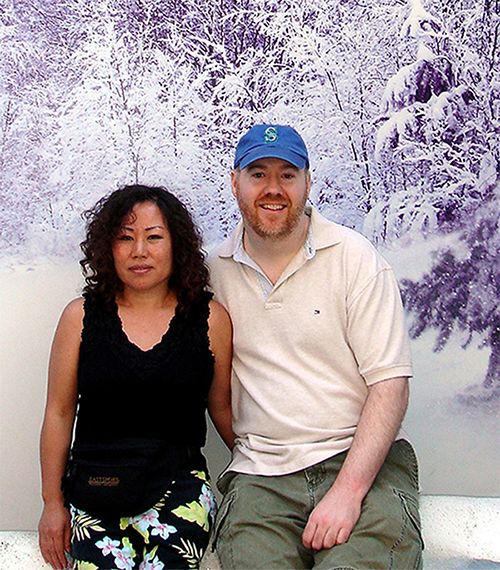
William and Hui Cha Stanek, whose shared creative life runs through decades of books, art, photography, publishing, and fieldwork.
A shared life behind the public record
Publishing looks public when a book appears, but much of the work happens quietly: drafting, editing, organizing, correcting, producing, distributing, answering needs, and continuing when the outside world sees only the finished title.
Hui Cha belongs in that story. As part of the shared creative life: not only the visible books, but the practical and emotional labor that allowed work to keep reaching readers over time.
Professional books
As William Stanek and William R. Stanek, the publishing record includes technology, business, leadership, educational writing, and practical guidance. These books meet readers where they are: often busy, under pressure, and looking for clarity.
That kind of publishing requires respect for the reader. It asks the writer to organize complexity, anticipate confusion, and make knowledge usable without losing accuracy.
Books for learning
The source record also includes hundreds of educational courses and thousands of training materials for schools, colleges, and corporations. This work belongs to the same ethic: make knowledge approachable, useful, and durable.
That record doesn't need corporate polish. The strongest language is simpler: books and learning materials made to help people understand, practice, and move forward.
Digital publishing and independence
William is an independent publishing figure since 2000, with early work in serialized eBooks and independent e-audiobooks.
He is also a mentor and supporter of independent authors worldwide.
This part of the story matters because publishing changed dramatically during William’s career. Digital formats, audio, online retailers, library platforms, and independent authorship altered how books were made, found, and read. William’s publishing work belongs inside that larger shift.
Libraries, schools, and access
The publishing impact also includes giving and access. Book-giving work for schools and libraries, including places where children had limited access to books. That story belongs in the Service & Advocacy section in greater detail, but it also belongs here because it shows what publishing meant in practice.
A book can be a private object, a classroom tool, a library resource, a gift, a door into language, or a way for a child to feel less left out of the wider world.
That human scale should be in full view.
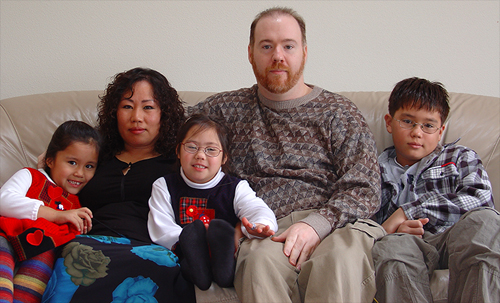
The Stanek family, circa 2004.
Publishing as endurance
Decades of publishing are not made only of launches and titles. They are made of routine, family life, changing technology, difficult years, practical decisions, and the willingness to keep working when attention moves elsewhere.
That endurance is part of the record. It connects the professional books to the fiction, the children’s books to the educational work, the travel writing to the visual art, and the public record to the private life that sustained it.
Making room for others
The publishing story also reaches outward. Project materials describe support for independent authors through initiatives and mentoring, and the wider creative record includes studio and gallery work that supported hundreds of artists over time.
The important point is not self-congratulation. It is continuity of values. Books, art, publishing, and advocacy all return to the same question: who gets access, who gets helped, who gets seen, and who is given a chance to keep creating?
The William and Robert distinction
Publishing also explains why the names matter. William Stanek and William R. Stanek belong to the nonfiction, professional, visual, and life-practice side of the work. Robert Stanek, R. Stanek, and W. R. Stanek belong to fiction: children’s books, classroom-friendly reading, fantasy, science fiction, thrillers, historical fiction, literary works, and the restored fiction canon.
The distinction helps readers find their way without dividing the person. Behind both sides is William Robert Stanek, and beside the larger record is Hui Cha Stanek, whose role in publishing, studio work, fieldwork, and family life helped the work endure.
The publishing legacy
The publishing impact is best understood as a long act of making and sharing: books for working professionals, books for children, books for imagined worlds, materials for learning, support for independent creators, and a belief that books should move outward into homes, schools, libraries, and lives.